Agentic Commerce is the shift towards a new era of digital trade where AI systems are no longer just supporting shoppers, but increasingly acting as autonomous customers. These agents can search, compare, recommend and complete purchases independently, changing how brands must structure and optimise commerce for the future.
In an agentic ecosystem, the traditional digital shelf becomes effectively invisible. Human shoppers are influenced by imagery, branding and emotional cues, whereas AI agents make decisions based almost entirely on structured product information and data accuracy. For Shopify brands, this means that product discoverability increasingly depends on catalogue completeness rather than just creative presentation.
If details such as compatibility, dimensions, pricing or real-time availability are not clearly exposed through high-quality structured data, then for an AI buyer the product may effectively not exist. This shift requires merchants to move beyond traditional Search Engine Optimisation and towards Answer Engine Optimisation, where discoverability depends on providing the best response to complex, intent-led queries rather than simply ranking for a single keyword.
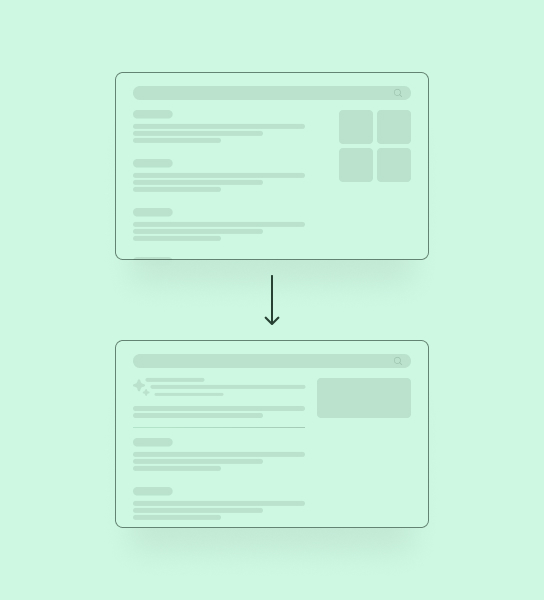
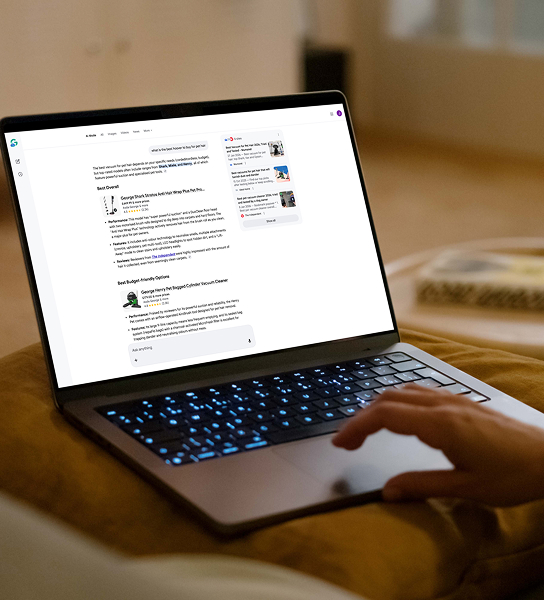
Search behaviour is changing as AI agents increasingly influence how products are found and selected. SEO is no longer only about ranking pages for human shoppers, but also about ensuring that AI systems can interpret, trust and surface product information accurately within automated shopping journeys.
For Shopify merchants, this places new importance on maintaining structured product schema, accurate metadata and complete feeds with pricing and stock integrity. Content must also evolve to answer conversational, problem-solving queries rather than relying purely on keyword targeting. As commerce becomes more agent-led, strong SEO will depend on clarity, reliability and machine-readable trust that AI systems can confidently recommend.
Paid media is also evolving as AI-powered shopping interfaces reshape the customer journey. Advertising will increasingly appear within assistant-led experiences, where AI agents may evaluate sponsored placements alongside merchant trust signals when making purchase decisions.
Shopify brands should begin preparing for emerging opportunities across ChatGPT-style shopping environments, while continuing to adapt Google Ads strategies as generative AI changes paid search formats. In an agentic commerce landscape, PPC success will rely on more than targeting alone, and will require paid visibility strategies aligned with AI-mediated decision-making channels and supported by strong underlying commerce data.

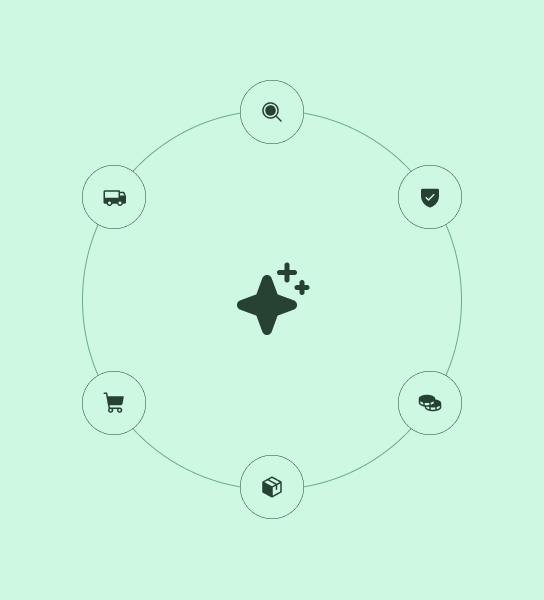
The traditional conversion funnel is beginning to collapse. Commerce is moving towards transaction models where the purchase may happen outside of a branded website, including within chat-based interfaces, virtual assistants or embedded AI storefronts.
For Shopify merchants, this introduces a new transaction layer where the storefront must be accessible beyond the traditional click-path. To support this shift, commerce systems must adopt open standards that allow external agents to understand what a store can do.
Protocols and frameworks are essential here. MCP enables structured access and permissions for AI agents, while Shopify’s support for emerging standards such as UCP helps ensure interoperable commerce capabilities. These frameworks allow brands to expose a capabilities manifest so AI agents can securely interpret rules around tax, shipping, loyalty and checkout without requiring bespoke integrations, ensuring the business remains the Merchant of Record even when the buyer is an automated system.
01
Agentic Data Structuring
AI agents do not interpret product imagery in the way humans do. They rely on structured data. We audit and refine Shopify catalogue architecture using advanced Schema and JSON-LD, ensuring critical attributes such as availability, compatibility and dimensions are machine-readable and trusted by AI systems. This creates a data moat that helps agents recommend your products confidently over competitors with incomplete information.
02
Universal Commerce Protocol (UCP)
Future-proofing requires adopting open standards. We guide Shopify brands in utilising protocols such as UCP to publish a commerce capabilities manifest. This allows AI agents to understand exactly what your store can do, from calculating tax rules to handling split shipments, enabling autonomous execution without bespoke integrations for every new platform.
03
Intent-Led Discovery (AEO)
Traditional SEO targets keywords, but agentic optimisation targets intent. We shift discoverability towards answering complex problem-solving searches, ensuring Shopify products are surfaced as the solution to specific needs rather than simply appearing as another result.
04
Embedded Checkout Architecture
The goal is zero friction. We support embedded checkout flows that allow AI agents to complete secure transactions directly within assistant environments, while ensuring Shopify merchants retain ownership of customer relationships, transaction integrity and Merchant of Record responsibilities even when purchases occur off-site.
05
Identity & Loyalty Bridging
Returning customers should not be treated as strangers by AI. We implement secure identity linking through Shopify Multipass or OAuth so loyalty points, VIP pricing and shipping preferences can be applied autonomously without users needing to share credentials.
06
Agentic Storefront Management
AI should be managed as a distinct sales channel. We help Shopify merchants control which inventory segments are exposed to specific AI agents, protecting margin strategy while ensuring automated commerce enhances rather than cannibalises primary revenue streams.

Agentic commerce is the next evolution of e-commerce, where intelligent AI agents can act on a customer’s behalf. These agents do more than support product discovery. They can evaluate options, personalise recommendations, and even complete purchases using real-time context and customer intent.
Agentic commerce is still in its early stages, but it is already moving from concept into practical experimentation. Brands are beginning to pilot agent-led shopping experiences now, and organisations that invest early will be best positioned as adoption accelerates.
For AI agents to operate safely and effectively, they need clear boundaries around what they can access and what actions they are permitted to take. Protocols like MCP provide a shared structure for permissions, context, and interoperability, helping to make autonomous commerce possible at scale.
MCP is not a standalone tool or platform. It is a technical protocol that defines how AI agents securely exchange context, permissions, and access rights across digital commerce environments.
We’ve got your details safe and sound.
We will review your message and a member of our team will be in touch shortly.



3 Agentic Commerce
Opportunities Guaranteed!
Take the 2-min checklist.
3 Agentic Commerce
Opportunities Guaranteed!
Take the 2-min checklist.
We’ve got your details safe and sound.
Watch your inbox for further information.

ISO27001:2022 Certified Information Security Management System
Copyright 2026 © B2 Agency Limited - All Rights Reserved. Company Registration Number: 14668246.