


Cycle Exchange is a UK-based retailer specialising in premium pre-owned bicycles and cycling equipment. Each bike is professionally inspected, serviced and certified before resale, giving customers confidence in the second-hand market. Operating in the high-value cycling space, they combine technical expertise with a strong focus on quality and trust.
Cycle Exchange approached us at a familiar inflection point. Revenue growth was the objective, and the initial assumption was that increasing the budget would be the most direct route to achieving it. The ambition was clear; confidence in that approach was less certain. Operating within a high-value, lower-volume retail environment meant the business faced a structural constraint that additional spend alone could not resolve. In categories where transaction volumes are naturally limited, increasing investment does not automatically deliver proportional returns. More often, it accelerates inefficiency. The team recognised this, which is why the conversation began with strategy rather than budget.
The core issue was not the level of investment, but the account structure itself. Conversion data was distributed too thinly across multiple campaigns, reducing the signal density that smart bidding systems rely on to optimise effectively. The structure had been designed to maintain control, but in doing so it had inadvertently created a ceiling. Sustainable growth required a different decision. Instead of increasing spend, the focus needed to shift towards restructuring the account so that every pound already invested could deliver stronger performance.
Key objectives were:

Drive Sustainable Revenue Growth
Deliver consistent revenue expansion while operating within clearly defined commercial efficiency parameters, ensuring growth remained stable, controlled and aligned with profitability targets.

Prioritise New Customer Acquisition
Realign bidding strategy, audience targeting and messaging to focus on attracting high-quality new customers, supporting long-term growth rather than short-term performance gains.

Protect Commercial Efficiency
Maintain strict spend-to-turnover ratios and return benchmarks, ensuring that growth was commercially profitable and not simply visible within platform metrics.



Before making any changes, we integrated commercial data from Shopify into our platform analysis. This was a deliberate and necessary first step. Assessing campaigns in isolation, using platform metrics alone, would have supported the surface-level narrative: performance appeared stable and return on ad spend was acceptable. However, it would not have exposed the structural issue beneath the surface.
The commercial data revealed a different picture. The account was not underfunded; it was fragmented. Multiple campaign structures were each drawing from a relatively small pool of conversions, and none were accumulating sufficient signal for smart bidding systems to operate effectively. The platforms were not underperforming due to limited budget. They were underperforming because they lacked the data density required to optimise with confidence.
The resulting recommendation challenged the initial instinct. Rather than increasing spend, we advised consolidating the structure. By reducing the number of campaigns and strengthening the remaining framework, conversion signals could be concentrated, providing smart bidding with the density it needed to perform reliably. The growth opportunity did not sit behind a larger budget. It sat behind a more strategically constructed account.



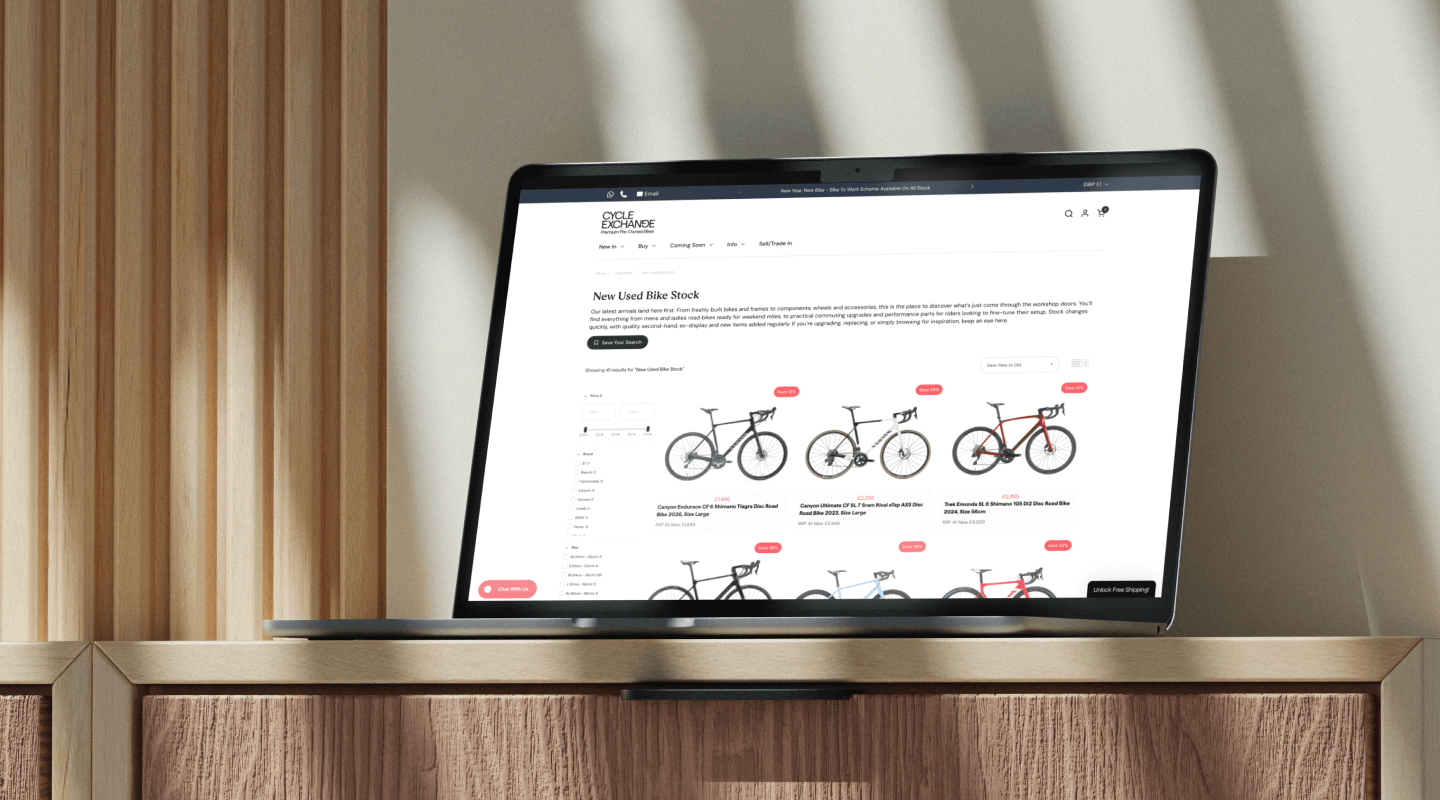
With the diagnosis complete, the structural work began. Campaigns were consolidated significantly, a change that required confidence from both sides, as consolidation can appear to reduce activity even when it is designed to strengthen it. The objective was to create fewer decision points within the platforms, each supported by richer, more concentrated data, rather than multiple decision points lacking sufficient signal.
At the same time, we introduced a recruitment-first approach across both paid search and paid social. Instead of allowing bidding strategies to optimise broadly across new and returning customers, we aligned audience targeting, messaging and bid priorities specifically towards new customer acquisition. In a lower-volume category, returning customers provide value, but they do not represent growth. Sustainable expansion depends on attracting new customers, and the strategy was restructured to reflect that distinction.
Commercial data remained central to optimisation throughout. Rather than managing performance solely against platform metrics, decisions were anchored to revenue contribution and efficiency against agreed commercial thresholds. This ensured paid media activity remained directly connected to tangible business outcomes, while giving Cycle Exchange clearer visibility into the true return on their investment.



Deluxe Interiors
Early impact on Amazon for Deluxe Interiors




-10% CPA Guaranteed
In Just 90 Days!
If we miss it, your fees are refunded.
-10% CPA Guaranteed
In Just 90 Days!
If we miss it, your fees are refunded.
We’ve got your details safe and sound.
Watch your inbox for further information.

ISO27001:2022 Certified Information Security Management System
Copyright 2026 © B2 Agency Limited - All Rights Reserved. Company Registration Number: 14668246.